The Emperor’s New Clothes
Two boastful weavers fool a vain emperor until one child's honest words end the pretence.
Free to read · Ten illustrated pages · No account required
Story note for grown-ups
Emperor retains shirt and trousers throughout; no nudity. Ending adds admission and practical repair while preserving central deception and child’s truth.
Page 1
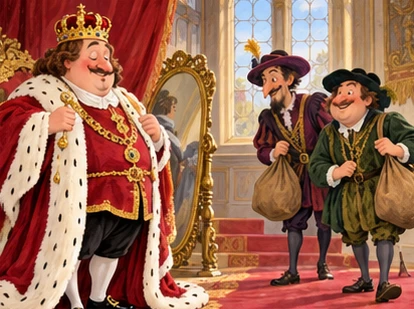
An emperor loved new clothes more than almost anything. His wardrobe filled many rooms. One day, two strangers arrived claiming they could weave a cloth invisible to anyone who was foolish or unfit for work.
Jump to a page or discussion
Page 2
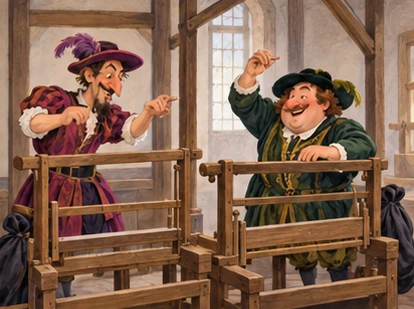
The emperor paid them and gave them silk and gold thread. They hid these in bags, then pretended to weave at empty looms. Their busy hands moved, but no cloth appeared between the beams.
Page 3
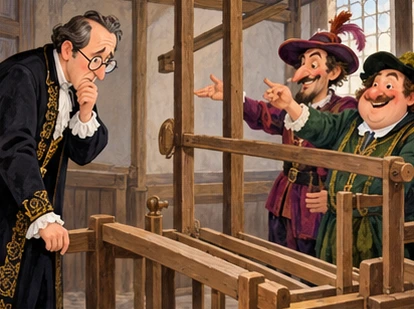
An old minister visited to inspect the work. He saw nothing at all, but feared being called foolish. When the strangers described wonderful colours, he nodded and said the fabric was remarkably beautiful.
Page 4
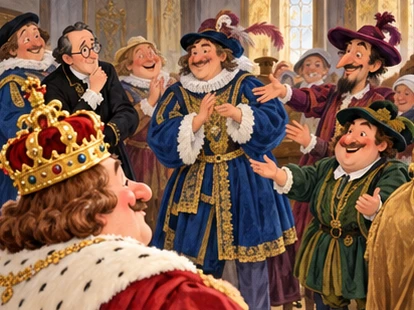
A second official saw the same empty frames and repeated the same praise. Soon the emperor visited with his court. Nobody wished to disagree, so everyone admired patterns that existed only in the strangers' words.
Page 5
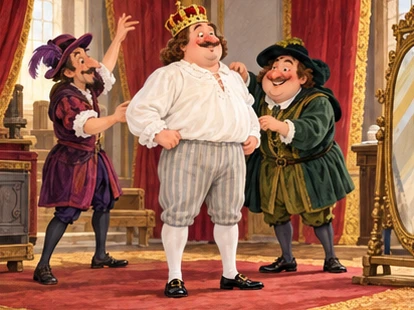
The strangers announced that the new outer robes were ready. They pretended to lift, cut and stitch the invisible cloth. The emperor stood in his plain shirt and trousers while they dressed him in nothing.
Page 6
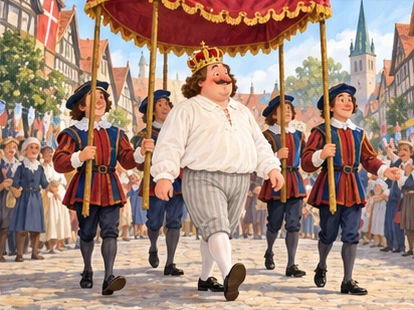
Looking in the mirror, the emperor saw only his ordinary clothes. Still, he praised the fit. His attendants held imaginary trailing robes, and the procession set out beneath a grand canopy into the town.
Page 7
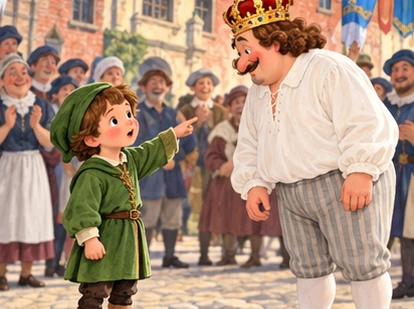
People along the road applauded because their neighbours applauded. Then a child spoke clearly: the emperor was wearing only his usual shirt and trousers. The nearest listeners looked again and began whispering the truth.
Page 8
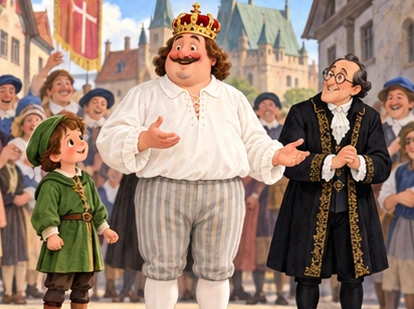
The whisper spread through the square. The emperor's face grew warm, but he could finally see the trick plainly. He stopped the procession and admitted that he too had been afraid to speak honestly.
Page 9
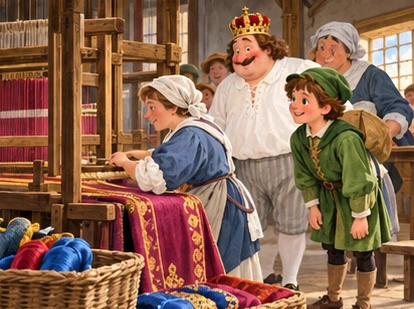
The pretend weavers were asked to return the stolen supplies. Real craftspeople made practical clothes from the silk. The emperor thanked the child, whose simple observation had ended a very expensive pretence.
Page 10
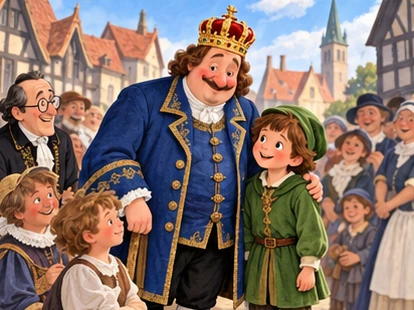
At the next parade, the emperor wore a modest, real coat. He invited questions instead of endless praise. The crowd admired it honestly, and nobody had to pretend that empty air was wonderful cloth.
Story summary and moral
Two strangers pretend to weave invisible cloth. Officials and the emperor praise the empty looms because they fear looking foolish. At the parade, a child says what is actually visible. The emperor admits his mistake and asks for honest questions in future.
What can we take from this version?
It helps to distinguish what we observe from what others expect us to say. This edition also shows the value of admitting a mistake and repairing it. The emperor keeps his ordinary shirt and trousers on throughout.
Questions to talk about
- What does the first minister see, and why does he say something else? Page 3
- Which detail does the child describe at the parade? Page 7
- How does the emperor’s response change between the two parades? Page 10
A story activity
Make two columns headed “What they saw” and “What they said”. Fill a row for the minister, the emperor and the child using the pictures or text. Finish by writing one kind, honest question someone could have asked at the empty loom.
Printable worksheet and answers
About this Neutoons edition
Original bilingual retelling, based on the cited old collection; shortened and softened for family reading.
Source tradition: Danish literary fairy tale. Based on “The Emperor’s New Clothes” in Andersen's Fairy Tales. Explore the source.
Neutoons English and Hindi text. AI-generated illustrations. This edition has still illustrations. The ten-page edition has no audio narration.