Father’s Heavy Box
A heavy wooden box makes a family reconsider what deserves their care.
Free to read · Ten illustrated pages · No account required
Story note for grown-ups
An adaptation about respecting older relatives. The friend’s misleading suggestion is acknowledged, and care is separated from the hope of receiving money.
Page 1
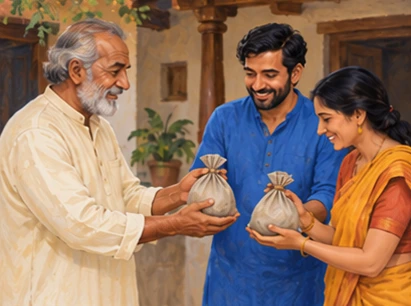
An older father shared his savings with his grown children so they could build their homes. He kept very little for himself. At first, both families invited him often and made a comfortable place at their tables.
Jump to a page or discussion
Page 2
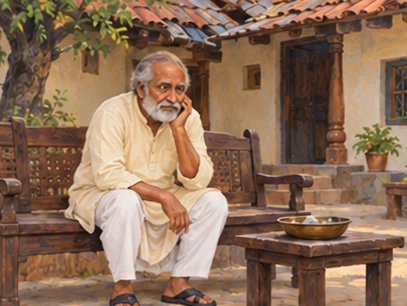
As the months passed, the visits became shorter and less frequent. The children were busy, and they began forgetting his meals and repairs. Their father sat in a chilly courtyard, wondering when someone would come.
Page 3
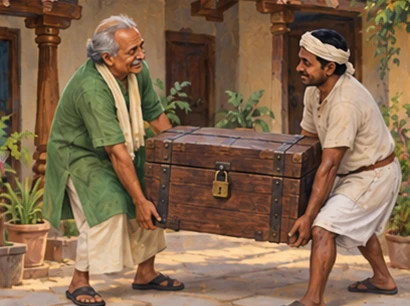
His old friend noticed the change and asked what troubled him. The father explained that he missed being remembered. His friend listened, then carried a strong wooden box into the house with another neighbor’s help.
Page 4
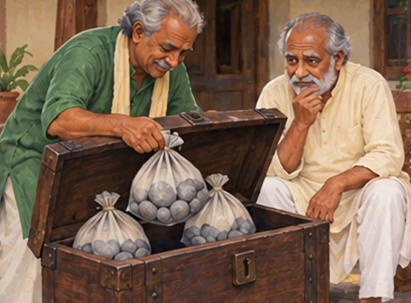
Inside the box were ordinary stones packed into cloth bags. The friend locked the lid and suggested that its weight would make people imagine treasure. The father was uneasy, but agreed to keep it while they considered what to say.
Page 5
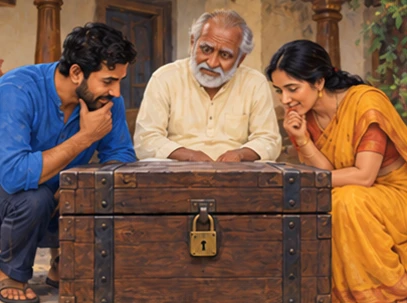
When the children visited, they noticed the chest beside their father’s bench. They asked what it held. He said only that it was heavy. Soon, both began wondering whether he had saved more money than they knew.
Page 6

They brought warm meals, repaired the roof, and made sure he had company. Their father enjoyed the comfort but noticed their eyes returning to the box. Care should not depend on a hidden pile of coins.
Page 7
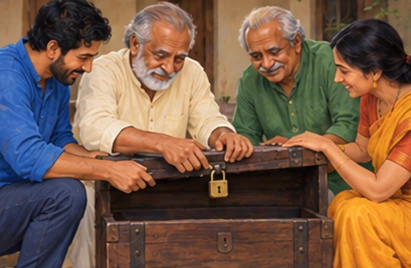
One afternoon, the father called both children and his friend to the courtyard. “There is something we must discuss,” he said. He took out the key and slowly opened the box before everyone.
Page 8
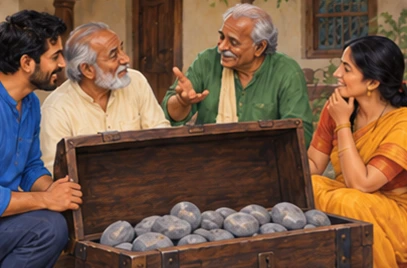
The cloth bags held stones, just as before. The children stared in surprise. The friend admitted his misleading plan. Their father explained that he had needed warmth and conversation long before anyone imagined a treasure.
Page 9
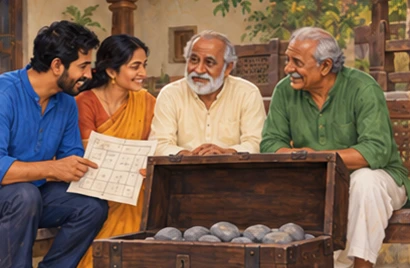
The children apologized for confusing their father’s worth with his savings. They made a shared plan for regular visits, meals, and repairs. This time, the promises named real days and useful jobs, rather than a possible reward.
Page 10
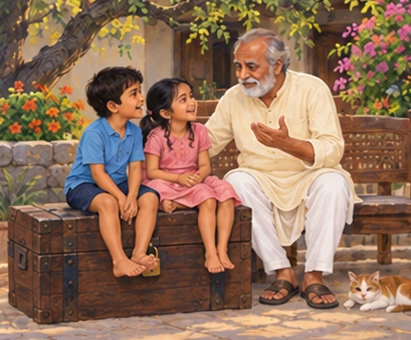
They emptied the stones into a little garden border. The wooden box became a seat for visiting grandchildren. Their father’s courtyard filled with stories again, and the family’s best treasure no longer needed a lock.
About this Neutoons edition
Original bilingual retelling. The father remains alive and opens the box with his children; the source’s deathbed trick becomes an honest family conversation and reconciliation.
Source tradition: Indian traditional tale. Based on “How the Wicked Sons Were Duped” in Indian Fairy Tales, edited by Joseph Jacobs (David Nutt, 1892). Explore the source.
Neutoons English and Hindi text. AI-generated illustrations. This edition has still illustrations. The ten-page edition has no audio narration.