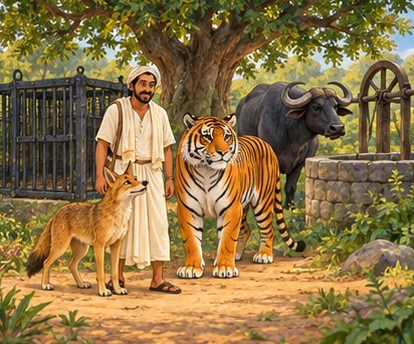
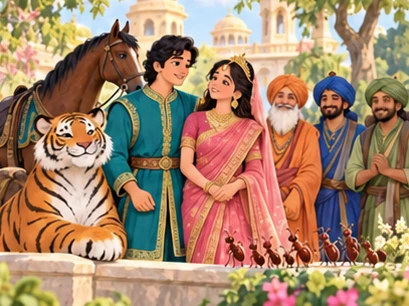
Harisarman’s Lucky Guesses
A man mistaken for a fortune-teller learns that lucky guesses cannot replace honesty.
Free to read · Ten illustrated pages · No account required
Story note for grown-ups
Harisarman’s hidden horse and false claims are mistakes, not recommended tactics. Coincidence reveals clues; he makes amends instead of continuing the deception.
Page 1
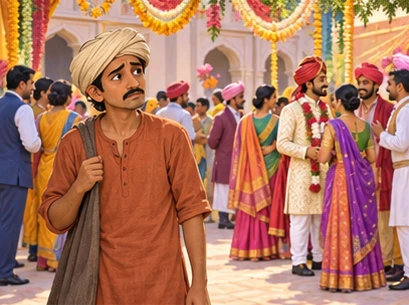
Harisarman worked at a wealthy household, but he felt unnoticed. During a grand wedding, he was overlooked again. Instead of explaining his hurt, he made a foolish plan to appear much wiser than he really was.
Jump to a page or discussion
Page 2
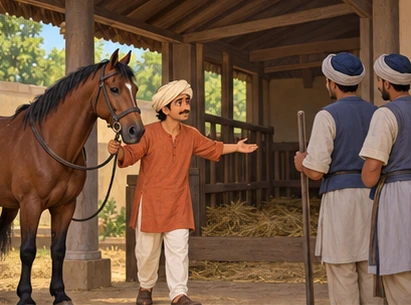
He hid the household’s horse in a nearby safe stable. When people searched, he claimed he could discover its location through mysterious knowledge. He pointed them to the very place where he had hidden it.
Page 3
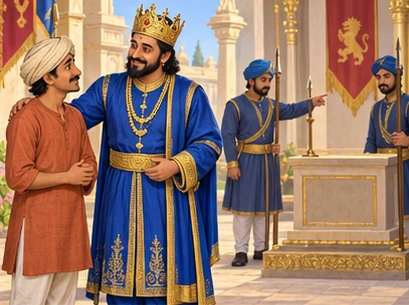
The horse returned unharmed, and people praised his apparent gift. Harisarman knew the praise rested on a trick. Before he could untangle it, the king heard the story and asked him to find missing palace treasure.
Page 4
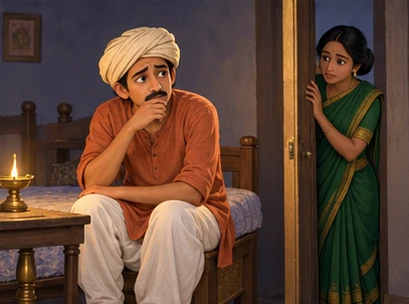
Alone in a quiet room, Harisarman worried aloud. “Oh, my tongue! What trouble you have brought me!” A palace attendant named Jihva, whose name meant tongue, heard him outside and thought her secret had been discovered.
Page 5
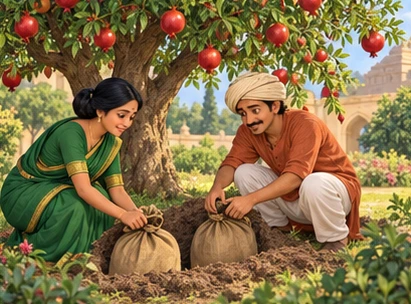
Jihva confessed that she had hidden the missing treasure beneath a pomegranate tree. Harisarman urged her to return it and tell the king. Together they brought the recovered bags into the palace courtyard that morning.
Page 6
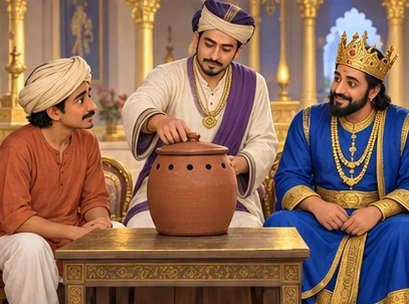
The king was grateful, but a thoughtful adviser wondered how Harisarman knew. To test the claim, he placed a small frog inside a covered jar with air holes. Harisarman had to say what was hidden.
Page 7
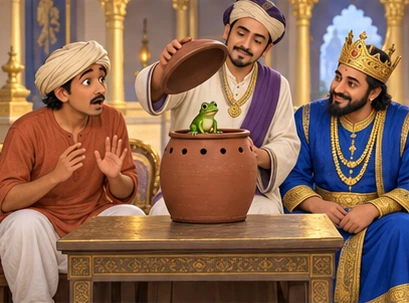
Harisarman felt trapped by his own story. Remembering his childhood nickname, he sighed, “Poor little Froggie, you are caught at last!” The adviser lifted the lid, and the real frog peeped out into the light.
Page 8
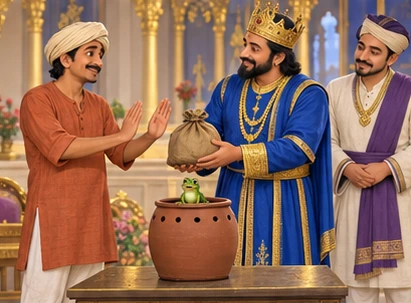
Everyone marveled at the apparent answer. Harisarman could have accepted another reward, but his stomach tightened. These were accidents, not powers. He stood up and asked the king to hear the whole story from its beginning.
Page 9
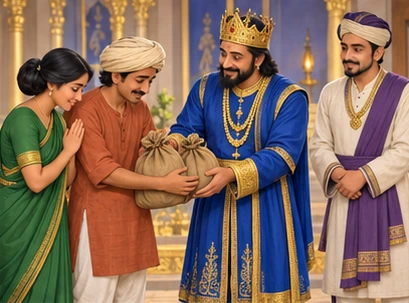
He admitted hiding the horse and explained the two lucky coincidences. He returned the rewards and apologized. The king listened, thanked Jihva for returning the treasure, and asked Harisarman what honest work he could do.
Page 10
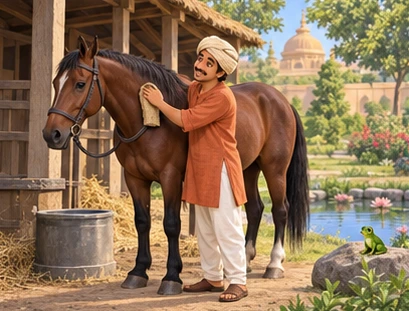
Harisarman chose to help care for the stables, where his real skills could grow. The frog went back to a garden pond. He had lost his false reputation, but gained something steadier: a name supported by truthful actions.
About this Neutoons edition
Original bilingual retelling. The source rewards Harisarman’s fraud with wealth; this adaptation explicitly ends with confession, returning rewards and choosing honest work. No threats or punishments are shown.
Source tradition: Indian traditional tale. Based on “Harisarman” in Indian Fairy Tales, edited by Joseph Jacobs (David Nutt, 1892). Explore the source.
Neutoons English and Hindi text. AI-generated illustrations. This edition has still illustrations. The ten-page edition has no audio narration.