The Shepherd and the False Alarm
A lonely shepherd learns why trust needs truthful words.
Free to read · Ten illustrated pages · No account required
Story note for grown-ups
An original child-friendly adaptation of an Aesop fable. Read together and discuss the choices rather than treating animal behaviour as a rule about people.
Page 1

A young shepherd watched his sheep on a hillside near the village. The flock grazed peacefully, but the long quiet afternoon felt lonely. He wished someone would come and talk.
Jump to a page or discussion
Page 2

He thought of an exciting way to summon company. He called that a wolf was near the flock, although he had seen none. His voice carried down the path toward the village.
Page 3

The villagers hurried up to help. They found the sheep safe and the boy smiling at his trick. Their worried faces changed when they realised that the alarm had not been true.
Page 4
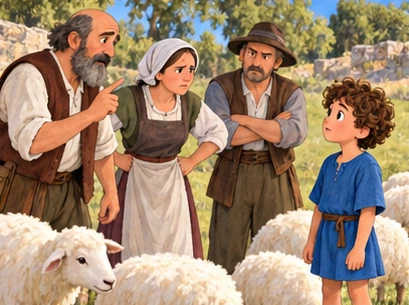
They explained that leaving work for an emergency was serious. If he wanted company, he could ask honestly. The boy agreed, but a few days later he made the same false call again.
Page 5

This time the villagers were disappointed as well as tired. They had trusted his words and been misled twice. The shepherd watched them return to the village, feeling less cheerful than before.
Page 6

Later, a real wolf appeared at the distant tree line. The sheep scattered toward their enclosure. The boy called for help, speaking truthfully now, but his earlier tricks made the message doubtful.
Page 7
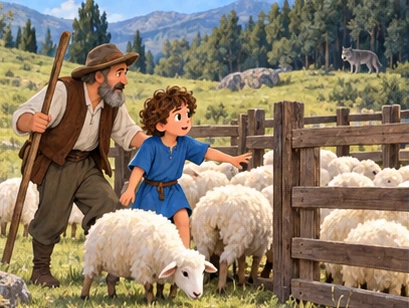
Some neighbours hesitated, thinking it was another false alarm. An adult shepherd checked anyway and came up the path. Together they guided the flock inside while the wolf stayed far beyond the field.
Page 8
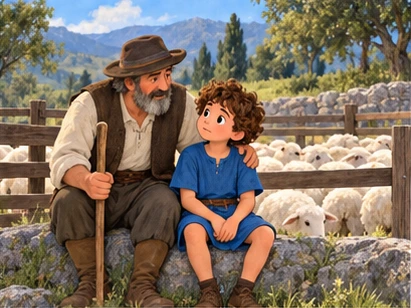
No sheep was hurt, but the delay frightened the boy. He understood that a true message could be doubted after repeated lies. Trust was easier to damage than to rebuild afterward.
Page 9

He apologised and helped his neighbours finish the work they had interrupted for him. The adults also agreed to check real danger carefully. Everyone needed truthful calls and responsible responses.
Page 10

On the next quiet afternoon, the boy asked a friend to visit after chores. They talked beside the safe flock. He no longer needed an invented emergency to say that he wanted company.
About this Neutoons edition
Preserves two false alarms and doubt during real wolf sighting; replaces killed sheep with checked emergency and safe enclosure. Adults retain duty to verify danger; honest companionship resolves loneliness.
Source tradition: Aesop. Based on “The Shepherd’s Boy” in The Fables of Aesop, selected and told anew by Joseph Jacobs (Macmillan, 1894). Explore the source.
Neutoons English and Hindi text. AI-generated illustrations. This edition has still illustrations. The ten-page edition has no audio narration.